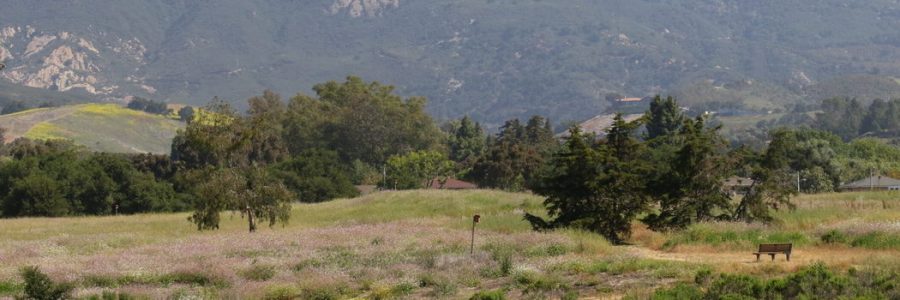
SHELBY PROJECT THREATENS GOLETA VALLEY
Submitted by Steve Ferry Residents of the Goleta Valley are alarmed by the recent, rapid, massive development that has occurred in their community. These huge developments are threatening the quality of life in the Good Land with traffic congestion, crowding, environmental degradation, and the loss of open space and bird habitat. Now, yet another developer wants to re-zone agricultural land, in direct violation of the City of Goleta’s General Plan, and force more houses into a parcel zoned for agriculture. Audubon members interested in preserving the integrity, health, and character of the Valley should express their opposition to the Shelby Project by contacting the Goleta City Council.
Help Protect Our Coast!
California’s independent Coastal Commission has been an amazing success for 40 years. In all that time the Coastal Commission has done an admirable job of limiting development on our state’s remaining pristine coastline and beaches. Now this work may be threatened: From February 10th through 12th, the California Coastal Commission is meeting in Morro Bay. A critical topic of this meeting is Agenda Item 8: “Consideration of the Dismissal of the Executive Director”. Dr. Charles Lester is the subject of Item 8, and Audubon California’s concern is that Dr. Lester’s dismissal would have adverse consequences for birds such as the threatened Snowy Plover. Please give the birds a voice! Click HERE to send an email to Governor Brown, requesting that Dr. Charles Lester remain on the Coastal Commission! If you would like to know more about this meeting, and see the comments that the commission has received as of Jan. 29th,
SBAS Leadership letter on the Refugio Oil Spill
Update 5/25/2015 – Please be advised that the most current and up to date information regarding the oil spill and especially its impacts to COPR and the Snowy Plover nesting site are available on our Facebook page. Click the Facebook icon at the top of any page on our site. Below is an update letter to our membership on the Refugio oil spill from the leadership of SBAS. Audubon has received word from Cris Sandoval, Director of Coal Oil Point Reserve, that the Refugio oil spill is starting to affect COPR. COPR could use help from Audubon volunteers to deal with this situation for the next few days. This is the peak of the Snowy Plover breeding season. There are nests and chicks on the beach. To reduce the impact of the spill on the plovers, COPR would like volunteers to act as extra docents on the beach.
Oil Spill on Coast Near Refugio State Beach
There has been an oil pipeline rupture near Refugio State Beach today. You can read about it at: Noozhawk at this link: http://www.noozhawk.com/article/oil_spill_reported_on_coast_near_refugio Edhat: http://www.edhat.com/site/tidbit.cfm?nid=153152 Santa Barbara Independent: http://www.independent.com/news/2015/may/19/big-oil-spill-along-refugio-coast/ Update 5/20/13 Read more from the Environmental Defense Center Want to help? See Noozhawk’s How to help page. Stay up to date at the Noozhawk main page the Edhat main page and the Independents main page Also Cal Spill Watch -Get the latest CDFW information here
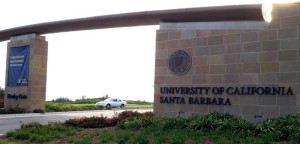
SUN improves UCSB long range development plan
In 2010, UCSB introduced its Long Range Development Plan (LRDP) calling for a 25% increase in student population as well as significant increases in faculty and staff. The plan also doubles the academic space on campus. A coalition of community groups (including SBAS) formed to respond to UCSB’s plan. Negotiations between the Sustainable University Now (SUN) coalition and UCSB resulted in a revised and more environmentally sensitive plan.
Santa Barbara Independent: Yellow-Billed Cuckoo Listed as Threatened
As reported in the Independent: “The yellow-billed cuckoo will soon be listed as a threatened species in parts of 12 western states under the Endangered Species Act, the U.S. Fish & Wildlife Service announced on Thursday.” Read the Independent article HERE. For more in depth coverage see the Fish and Wildlife Service Public Advisory.
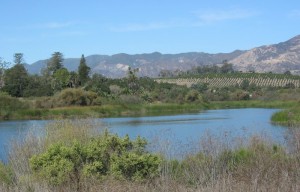
Day of Caring Restoration Workday at Lake Los Carneros
Santa Barbara Audubon will be hosting a volunteer workday at Lake Los Carneros on Saturday September 20th at 9 AM. The workday is part of United Way of Santa Barbara County’s Day of Caring and also falls on the first day of Santa Barbara’s Creek Week.
SBAS Endorses Measure P
The SBAS Board, at its retreat on July 26, voted to endorse Santa Barbara County Measure P, the anti-fracking initiative that will appear on the November ballot. The initiative would ban fracking and other forms of oil well stimulation methods in Santa Barbara County. The SBAS Board voted that these extraction techniques are too dangerous to humans and the environment.
Noozhawk: Cuyama Solar Facility Approved by County Planning Commission
On July 22, Steve Ferry and Dolores Pollock, our co-presidents, spoke before the County Planning Commission, making recommendations.
Creek Setbacks in Goleta
The SBAS Conservation and Science Committee has been monitoring several proposed development projects in Goleta, particularly those projects that are in proximity to creeks and other natural resources that are wildlife habitats and migration corridors. We have reviewed environmental impact reports (EIR), sent comment letters to the City of Goleta recommending mitigation strategies, identifying critical habitats and omissions or errors in reports of biological data, and attending meetings and hearings with developers, City agencies and other environmental advocacy organizations in Santa Barbara and Goleta.
Tricolored Blackbird California Survey 2014
Richard Figueroa, SBAS Science Chair, has been recruiting and coordinating volunteers to monitor and collect survey data for tricolored blackbirds to document their decline in numbers. Our volunteers have surveyed sites in Santa Ynez and Cuyama. The conservation of the species has received increased attention due to the petition to list the species under the protections of the federal and state of California Endangered Species Acts.Although these petitions were declined, the tricolored blackbirds remain a species of concern and the focus of conservation efforts. CA Audubon and UC Davis are part of the Tricolored Blackbird Working Group that has produced a conservation strategy, a guide to conservation efforts and a response to concerns over documented declines in the distribution and abundance of the species. These declines occurred primarily in the 20th century in an apparent response to widespread, landscape-level changes in regions where they were formerly abundant. The Conservation Strategy can be downloaded here: Conservation Plan
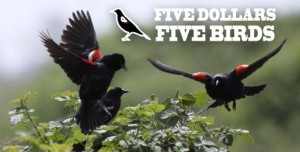
EMERGENCY: Donations needed to save a huge Tricolored Blackbird colony
California Audubon is running a $5 dollars / 5 Birds campaign to protect rare Tricolored Blackbirds and the heat just got turned up. TOMORROW a wheat field housing a huge colony of birds will be harvested destroying a colony unless we raise $40,000! Please consider donating at California Audubon’s website (click here to donate) This drought has been hard on everyone, the birds included. And it’s about to get harder, unless we raise the funds to protect so colony with approximately 50,000 of the state’s Tri-colored blackbirds.
Paradiso del Mare Appeal Rejected
The county board of supervisors voted 5 to zip on Tuesday February 4th to reject the appeal supported by SBAS of the development at Paradiso del Mare. Four of our board members were among the 30 or so people who spoke in favor of the appeal.
SBAS Supports Protecting the Los Padres National Forest
421,058 acres of Los Padres National Forest are vulnerable to development due to proposed changes in the Land Management Plan. The U.S. Forest Service is considering if it will protect these rare plant and wildlife habitats in it’s Inventoried Roadless Areas or open them to development. Santa Barbara Audubon has joined with many other local organizations to support designating them “Recommended Wildreness” areas which have highest level of protection. Dowload the full letter voicing Audubon’s support for protecting these vulnerable areas.
Noozhawk: Trust for Public Land Finalizes Purchase of Goleta’s Ocean Meadows Golf Club
Santa Barbara Audubon applauds the efforts of the Trust for Public Land, UC Santa Barbara and the Land Trust for Santa Barbara County to acquire Ocean Meadows Golph Course. SBAS will be involved in the planning stages of restoring the golf course to its natural state. Read the full article at Noozhawk! Read the UCSB News Release
SBAS Supports Acquiring Ocean Meadows Golf Course
Ocean Meadows Golf Course was built upon the upper section of the Devereux Slough and is an extremely important wildlife linkage between the Goleta Slough Open Space and the Ellwood-Devereux Open Space. Santa Barbara Audubon wrote to the U.S. Fish and Wildlife Service to support the acquisition of Ocean Meadows and returning it to a more natural state.
Improve Village at Lake Los Carneros EIR
Santa Barbara Audubon is encouraging the City of Goleta to take a deeper look at the proposed development called the Village at Lake Los Carneros. The Environmental Impact Report (EIR) could use improvement regarding transportation, water and energy efficiency, mitigating creek impacts during development as well as selecting native plants to support local birds as part of their landscaping. The Santa Barbara Audubon Society sent this letter in addition to speaking publicly at the November 17th hearing.
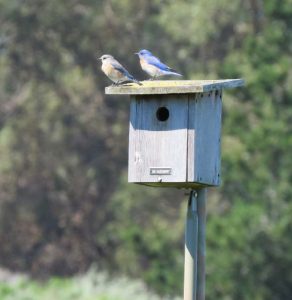
2022 Nest Box Program Report
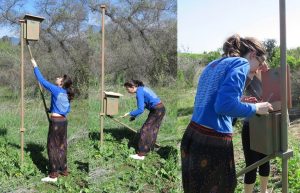
An array of nest boxes at Lake Los Carneros, Goleta, California acts as a scientific monitoring instrument utilizing TRES and WEBL as vectors to evaluate aspects of their lives and the quality of their environment over time. This report was written as Don Schroeder retires from leading the project after 14 years of dedicated service. We are currently looking for someone to take the reins of this flagship program. Please reach out through the Contact link if you are interested. This Link will download the 2022 Tree Swallow Nest Box report prepared by Steven Senesac and Don Schroeder.
Breeding Bird Study: 2020 Progress Report
by Mark Holmgren The purpose of the BBS is to bring together information on all breeding birds in all parts of the county to facilitate explorations of the relationships of birds to land. These explorations can inform conservation, bird watching, research, environmental planning, and education at several levels. After 5 years of gathering historic and recent breeding records the database holds 9352 records of 188 species known to breed in Santa Barbara County. Many decisions can now be made species by species. For example, we can now determine the breeding period of each of the common species rather than assuming a broad breeding period for all breeding species combined. Another strength of the BBS is the 1500 photos of breeding that provide evidence and examples of where and how breeding takes place. View the mapped records, play with the database, and you can submit breeding records at the SB Audubon website: https://santabarbaraaudubon.org/santa-barbara-county-breeding-bird-study/. We’re
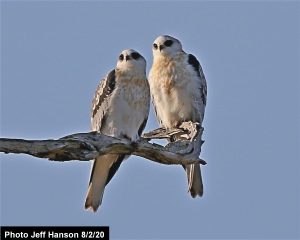
White-tailed Kite Watch 2020 Summary
by Mark Holmgren Breeding presence of WTKI in the Goleta Valley Study Area* has been tracked for more than 30 years. In 2020, the breeding period extended from February into September. 11 nesting events produced a minimum of 14 young. We do not know how many of these achieved independence from parental care. More Mesa and Lake Los Carneros are the most reliable and often the most productive open spaces hosting kites. They produced 4 broods and 2 broods respectively. Other open spaces that hosted breeding kites were Winchester Cyn, the Ellwood neighborhoods (but not Ellwood Mesa), and San Marcos Foothills. Other large open spaces that have supported Kites in the past did not do so this year: Goleta Slough, San Antonio Creek, and Ellwood Mesa. We hope for more volunteer Kite Watchers to assist tracking kites and other raptors in our open spaces in 2021. * The Study Area is bounded by
2020 Nest Box Program Report
This is the content of the presentation given by Steve Senesac to the Science / Conservation committee meeting earlier in August on the results of the Tree Swallow nest boxes at Lake Los Carneros. Click on the title page for a larger image then scroll through the slides by clicking the arrow on the right of the image.
Santa Barbara Audubon Society – Nest Box Program
By Steve Senesac – Science Chair [Editor’s note: This is the full article referred to on page 5 of El Tecolote March-May 2020.] Brief History In 2004, Jan Wasserman presented the Tree Swallow Nest Box Program that she was doing in Ventura. This ignited the interest of some our members at that time, David Kissner, Dave Eldridge, and Don Schroeder. Dave Eldridge was instrumental in building many of the boxes and Don Schroeder developed a scientific methodology for monitoring the boxes, as well as the basic training materials that we still use. In time, the reins passed on to Andy Lanes and Richard Figueroa, who involved students from UCSB and evolved our basic training program. Elaine Tan, Peter Thompson, Betsy Moony, Jayne Wamsley, Diane and Leah Vasquez, and again, Don Schroeder have been the mainstay of the program these past several years, as well as a continued interest from UCSB. Recently
SBAS Science – A 2019 Summary
2019 continued to be a busy year for our small but dedicated Science committee led by Steve Senesac. Below is a brief summary of the programs they are working on.Nest Boxes SBAS has 22 nest boxes at Lake Los Carneros. They are used by both Tree Swallows and Western Bluebirds. The nesting season runs from about March to August. This year we had six dedicated volunteers checking the status of the nests each week and another team of four banding or checking the bands of the birds at appropriate times. In 2019 we had 104 Tree Swallow and 10 Western Bluebirds fledged. From the banding we determined that the Western Bluebirds were returning to the same nests each year with the same mate. The Tree Swallows however were not all returning and then to different nests with different mates. The Tree Swallows often do two nests in one season and
Post-drought Progress Report
Submitted by Mark Holmgren This is an update on the post-drought progress towards recovery of White-tailed Kites in the Goleta Valley. We are approaching the middle of the Kite breeding period. Recall that last year we had only two breeding events—at western More Mesa and western Ellwood Mesa. In 2015, we also had only two. They successfully bred somewhere in western Goleta Slough and at western More Mesa, with nest starts, but no completions, at Winchester Cyn and San Antonio Creek trail. This year we know of only 3 occupied territories. At 2 of them—Lake Los Carneros and western More Mesa—breeding is progressing with chicks visible in nests. This morning two fledgling Kites with an adult loosely attending them was a surprise at western Ellwood Mesa. Prior to today we knew that adults were present at Ellwood, but we had no idea they were well into breeding. These two babies
Breeding Bird Study of Santa Barbara County
by Adrian O’Loghlen [Editor’s note: This is the full article referred to on page 3 of El Tecolote September-November 2016.] One of the most informative approaches for assessing how the rapid and extensive development of urban and rural lands affects local bird populations is to monitor the breeding activity of species that have historically bred in an area. Furthermore, collecting this type of information is important more generally because it is widely accepted that birds can be indicators and provide insights into the ‘health’ of habitats and ecosystems used by all local wildlife. We are very fortunate in SB County that the process of gathering this key information is in progress and a sizable database of local bird breeding records already exists. We have Mark Holmgren to thank for this. Back in the 1980’s, when he was working as the Curator of the Vertebrate Museum at UCSB, he recognized the
The SBAS Tree Swallow Nest Box Project
Air BNB Audubon Style By Steven Senesac [Editor’s note: This is the full article referred to on page 3 of El Tecolote April/May 2016.] Introduction The Tree Swallow is a cavity nester that naturally nests in tree cavities (often made by woodpeckers). Human development frequently removes many trees and those that remain are often groomed in a way that minimizes dead branches (most appropriate for cavity nests). Such habitat disturbance is the likely reason why tree swallows dropped to the status of being an uncommon breeder around Santa Barbara and Ventura. Jan Wasserman was instrumental in reversing this in Ventura beginning in the l980’s and continuing into this century. Santa Barbara Audubon took inspiration from her efforts and began its own nest box program in 2005. Dave Eldridge and Don Schroeder were two of the people instrumental in developing the program that I inherited in July 2015 when I became
2014 Santa Barbara County Science Fair Winner of the Audubon Award
The 2014 Santa Barbara County Science Fair was held in March, and one of the judges was Richard Figueroa, SBAS Science Chair who had the honor of presenting the Santa Barbara Audubon Award to this year’s winner, Righetti High School senior, Danny Luu. Danny’s project: “The Effects of Runoff on Salvia Leucantha and Hummingbird Interactions” also won a gold medal and the Best in Fair award. Danny Luu was invited to present his winning science fair project at the April SBAS program, a presentation of Jeff McLoughlin’s film: The Condor’s Shadow held at the Santa Barbara Museum of Natural History. The Santa Barbara Audubon Award is named in honor of founding SBAS member, Joy Parkinson.
Tricolored Blackbird California Survey 2014
Richard Figueroa, SBAS Science Chair, has been recruiting and coordinating volunteers to monitor and collect survey data for tricolored blackbirds to document their decline in numbers. Our volunteers have surveyed sites in Santa Ynez and Cuyama. The conservation of the species has received increased attention due to the petition to list the species under the protections of the federal and state of California Endangered Species Acts.Although these petitions were declined, the tricolored blackbirds remain a species of concern and the focus of conservation efforts. CA Audubon and UC Davis are part of the Tricolored Blackbird Working Group that has produced a conservation strategy, a guide to conservation efforts and a response to concerns over documented declines in the distribution and abundance of the species. These declines occurred primarily in the 20th century in an apparent response to widespread, landscape-level changes in regions where they were formerly abundant. The Conservation Strategy can be downloaded here: Conservation Plan
White-tailed Kite Monitoring 2013
By Anna Hilliard Two years ago, an El Tecolote article posed the question: “What might it take to create a formalized local monitoring program for the white-tailed kite?” This September, with the help of dedicated observers and coordinators, the White-tailed Kite Monitoring Project (aka Kite Watch) wrapped up its second successful season of nest and roost site monitoring sponsored by donors to the SB Audubon Society. Under the guidance of long-time kite watcher Mark Holmgren, and project coordinators Mariah Edmonds and Anna Hilliard, student interns and community volunteers successfully collected data on breeding and roosting territories throughout the Goleta area. After the massive influx of kites seen in the 2012 breeding season, this year’s kite crop is much more modest. Kites are capable of rearing two clutches during a breeding season if conditions are right. This season, the dry winter preceding the breeding season, combined with a lack of spring
Conservation Committee Update
By Jonathan Appelbaum It has been a busy summer for the Santa Barbara Audubon Society’s Science and Conservation Committee. Under the guidance of outgoing Conservation Chair, and new SBAS Co-President Steve Ferry; outgoing Science Chair, and new SBAS Education Chair, Andy Lanes, and myself, the newly installed conservation chair, the Committee has been active in a variety of research, policy and advocacy arenas. The SBAS Science Committee was active in organizing and staffing research locally on the Central Coast including studying black phoebe nesting at Arroyo Hondo Preserve, tree swallow nest box monitoring at Lake Los Carneros and Coal Oil Point Reserve and of course white-tailed kite monitoring throughout the Santa Barbara area. The chapter joined forces with other conservation organizations such as the Environmental Defense Center, Santa Barbara Channelkeeper and the Urban Creeks Council to form a more powerful environmental coalition and lend its voice to a variety of
Tree Swallow Nest Box Projects in Santa Barbara
Opportunities to Learn Nesting Biology While Improving Our Environment By Don Schroeder and Dave Eldridge Introduction In October, 2004, the Santa Barbara Audubon Society (SBAS) hosted a presentation by Jan Wasserman on the Tree Swallow nest box projects at sites around Ventura. She shared her experience with setting up and conducting these projects. She and a small band of volunteers have been able to establish nesting sites for this species which had previously dropped to the status of being a rare breeder in Ventura and SB Counties. The tremendously exciting result was that, in a period of about 12 years, over 10,000 young swallows have been fledged from nest boxes around Ventura. It seems very fitting that humans can be such a driving force towards restoring a bird population that had been forced into a steep decline due to human activities such as agriculture and housing development. The Ventura projects